Hey everyone, I’m Jake, and for the last 8 years, I’ve been running the local plastic drum supply spot—you know, the one that’s been around the industrial park since 2015. Every single week, I get the same question at least three times: “Do your drums have something that shows if someone’s messed with ’em before?” It’s such a common, important question, and honestly, I get why folks ask it. Whether you’re shipping cleaning chemicals, food-grade oils, or even lab reagents, you can’t just take a carrier’s word for it that your product’s been handled right. Let’s break this down like I would over a coffee with a regular customer, no corporate jargon, just real talk. Plastic Drum
First off, let’s cut to the chase—yes, there are plastic drums with tamper-evident features, and we’ve got them in stock right now. But before I jump into what they look like, let’s talk about why this isn’t just a “nice-to-have” extra. A couple of years back, I had a customer who makes non-toxic all-purpose cleaner for grocery stores. They were using plain old drums without any tamper stuff, and halfway through a cross-country haul, their distributor called panicking—said a couple of drums had broken seals. Turned out a guy cut into one to siphon a small amount of cleaner to dump into a cheaper generic, and then just re-stacked the drum like nothing happened. The grocery store pulled 12 pallets of their product off shelves, they lost like $40k in revenue, and they still had to do a whole recall. That’s when I realized how big this is for small to mid-sized businesses, not just big pharma or chemical giants.
So what exactly counts as a tamper-evident feature for a plastic drum? It’s not just some little sticker that falls off when you look at it—those are useless. Real tamper stuff has to do one key thing: if someone opens the drum before you, you can see it immediately. No guessing, no “maybe it was like that from the factory.” Let’s run through the options we carry, since that’s what I know best as a supplier.
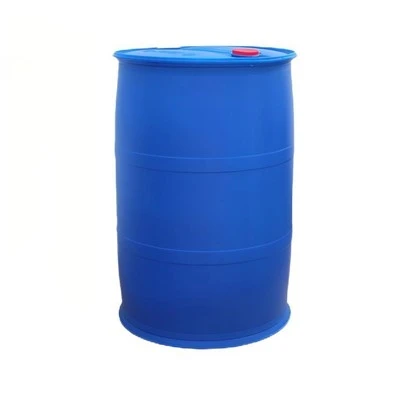
First up, the most common one we stock: tamper-evident ring seals on the drum’s screw cap. Wait, let’s be clear—this isn’t just a regular cap with a plastic ring around it. The good ones (the ones we don’t sell the cheap knockoff versions of) have the ring molded directly to the cap. When you twist the cap to open the drum for the first time, that ring snaps clean off the cap and stays stuck on the drum’s top rim. You can’t put that ring back on without gluing it, basically. So when your driver hands you a drum, if that ring’s still whole and snug around the cap’s base, you know no one’s twisted that cap open. If it’s broken, or missing, or just hanging on by a thread? You walk away, no questions asked. We carry these in both 55-gallon and 30-gallon sizes, in HDPE (high-density polyethylene) which is the standard plastic for drums, and we have them in both closed-head (the ones with two openings, 2-inch and ¾-inch, for pumping) and open-head (the ones with a full top that pops off for big loads). The rings are color-coded too, by the way—black for chemical-grade, white for food-grade, clear for lab use—so you don’t mix up your supplies.
Another one we’ve been testing out for the last year is the tamper-evident shrink band. These aren’t just the old plastic bands you put around a soda can lid. We use heat-shrink bands that fit tight around the entire cap and the top part of the drum’s neck. They have tiny, pre-scored lines all around them, so if anyone tries to twist the cap open, the band tears in specific places—you don’t get a ragged mess, it splits clean along the scores. We also print a small “VOID” graphic on the band in ink that rubs off if it’s been broken, so there’s no way to fake it. Why would you want these? Well, some customers that handle bulk powders (like fine flour, laundry detergent powder, or chemical powders) prefer these because the ring seal can sometimes get tangled up with dust, making it hard to tell if it’s broken. The shrink band sits smooth over the neck, so dust doesn’t mess with it. We order these shrink bands custom for our drums, so they work with our specific cap sizes—no generic stuff here, it’s made to fit perfectly.
Wait, and there’s one more that’s been a game-changer for our pharmaceutical and biotech customers: tamper-evident bungs. For closed-head drums, the small ¾-inch opening uses a plastic bung instead of a screw cap, right? We now carry bungs that have a breakable tamper pin inside. You twist the bung to close it, and the pin locks into place—once you twist it the right way to open it, the pin snaps off inside the bung. If the pin’s still there, it means no one’s opened that small bung. If it’s missing, well, someone’s been poking around. That’s huge for people who only need to access a small amount of product from a big drum—they don’t have to open the whole cap, just the bung, and they still get that tamper proofing. We had a biotech lab come to us last month that was using regular bungs for their reagent drums, and they’d had issues with internists accidentally opening the wrong drums because the bungs were all the same. The tamper pins are color-coded too—blue for biological reagents, red for hazardous chemicals, so no mix-ups and no tampering.
Now, I know what some of you are thinking: “But adding tamper stuff makes the drums more expensive, right?” Yeah, a tiny bit. But when you compare that extra $1-2 per drum to the cost of a recall, lost revenue, or even a lawsuit if someone tampers with your product and gets hurt? It’s nothing. Let’s be real—most small business owners I talk to would rather pay that extra buck than risk losing their reputation, or worse, getting in trouble. A lot of customers think they can save money by buying plain drums, but the hassle later is way worse. We work with every budget, too—we don’t push the most expensive tamper drum if a customer just needs a basic ring seal for occasional shipments. We walk through their needs: what are they shipping? How are they hauling it? Are they storing it for a long time? Then we pick the right tamper feature, no upselling, no junk.
Wait, let’s also bust a common myth here. Some people think tamper-evident means tamper-proof. No such thing. If someone really wants to get into a drum, they can, but tamper-evident is about showing you that it’s been opened. That’s the whole point. It’s not to stop thieves, it’s to catch them. If someone tampers with your drum, you will see it immediately—no second-guessing, no “maybe it was damaged in transit.” That’s the key. And all the tamper features we carry are third-party tested, by the way. I don’t trust something that just says “tamper-evident” on a label from some no-name manufacturer. We test every batch: we have our guys twist the cap 10 times, yank on the shrink band as hard as they can, test the bung pin to make sure it snaps but doesn’t come loose on its own. If it doesn’t pass, we send it back, no questions.
Another thing I get asked: do these tamper drums work with all the accessories we use? Like, pallets, pumps, lid locks? Short answer: yes, mostly. The ring seal drums fit standard pallet slots just like regular drums—no weird extra parts sticking out. The shrink bands, while they sit tight, don’t get in the way of locking the drum down with a plastic or metal lid lock. The tamper bungs fit with all the standard hand pumps we stock, too. We did have one customer a few months back that tried to use a big industrial pump on a tamper bung, and it worked, but they just had to make sure the pump wasn’t forcing the bung open. So we always tell customers to reach out, and we’ll give them the exact specs for their gear, no guesswork.
Let me tell you about a recent customer success story to make this real. A guy named Mike runs a craft distillery out of Portland, Oregon—they make small-batch gin and vodka, and they use food-grade plastic drums to store the raw grain alcohol before it’s distilled. He was using plain drums, and a couple of times, he found drums that had been tampered with, and small amounts of alcohol were missing. That was a huge deal for him, because alcohol is precious, and also, if someone was sneaking in, he didn’t want them messing with the grain. We set him up with our food-grade white tamper-evident ring seal drums, and he added a little padlock over the cap too (that’s allowed, doesn’t affect the tamper feature). A month later, he texted me a pic—one of the shipment had a broken ring seal, and his driver caught it before it even left the carrier’s yard. He ended up tracking down the driver’s helper who tried to siphon a shot, and since he had the broken ring as proof, he got his money back from the carrier, no fight. He told me that the extra $0.75 per drum was the best investment his distillery made that year.
Now, if you’re reading this and thinking, “Yeah, I need these drums,” here’s what you do next. Don’t wait till you have a problem like Mike did, or the grocery store cleaner company I mentioned earlier. Send me a message, or give me a call, and we’ll chat through your exact needs. Tell me what you’re shipping, what size drums you need, if they’re food-grade, chemical-grade, lab-grade, whatever, and we’ll find the right tamper-evident feature for you. No pressure, no high sales pitch—just real advice, since I’ve been in this game long enough to know what works and what’s just flash.
Wait, before I wrap up, let me add a quick note for anyone who might be using drums for long-term storage. A lot of people keep drums in warehouses for months or even years, and sometimes the tamper seals can get brittle if it’s hot or cold. We use high-quality HDPE and the same kind of plastic for the tamper rings and bands that’s used for the drums themselves, so they hold up in all temps—from freezing Michigan winters to the blistering Texas summer heat. We tested that last year, actually—we left some tamper drums in a loading dock in 95-degree weather for 2 weeks, and the rings still snapped clean when twisted, no cracking. If you’re storing drums in extreme conditions, just let me know, and we can adjust the tamper feature to be extra durable for that.
At the end of the day, plastic drums with tamper-evident features aren’t a fancy add-on—they’re a way to protect your product, your business, and your customers. I’ve seen too many good businesses get burned because they skipped this, and it’s not worth it. We’ve got the drums in stock right now, ready to ship, and we can get them to you in 3-5 business days if you need them fast.
If you have any questions at all—even if you just want to double-check if a tamper feature works for your specific shipment—hit me up. I don’t know everything, but I know plastic drums, and I’ll be honest with you if something isn’t right for you. No AI-generated answers, no corporate lines, just a guy who’s been loading drums onto trucks for 8 years, and wants his customers to stay safe and successful.
500L IBC Tank References:
- U.S. Food and Drug Administration. (2022). Food-Grade Packaging Materials Guidance for Small Businesses.
- Plastics Industry Association. (2023). Tamper-Evident Packaging Standards for Industrial and Commercial Containers.
- Occupational Safety and Health Administration. (2021). Hazardous Material Shipping Requirements for Sealed Containers.
- National Sanitation Foundation. (2022). Standard 2: Food Equipment Materials for Transport and Storage Containers.
Jiangsu Xinhuasheng Packaging New Materials Co., Ltd.
Jiangsu Xinhuasheng Packaging New Materials Co., Ltd. is one of the most professional plastic drum manufacturers and suppliers in China, featured by quality products and low price. Please rest assured to wholesale durable plastic drum in stock here and get quotation from our factory. Customized orders are welcome.
Address: No. 5 Tieta Road, Industrial Park, Guyang Town, Dantu District, Zhenjiang City, Jiangsu Province, China.
E-mail: manager@jsxhsgs.com
WebSite: https://www.xhsibc.com/
