Hey there, if you’re sourcing CNC turned shafts for automotive, industrial, or even aerospace applications, you’ve probably heard the phrase “heat treatment” thrown around like it’s some kind of manufacturing magic trick. As a CNC turned shafts supplier with over a decade of field calls and customer feedback under my belt, I can tell you it’s way more than a trick—it’s the make-or-break step that turns a decent raw shaft part into one that doesn’t snap mid-assembly or wear out in 6 months. Most of our new buyers come to us thinking their CNC machining work is the end of the line, but they’re totally missing the boat: the right heat treatment tweaks mechanical properties so hard that a shaft that bends under 200 lbs of torque suddenly holds 500 without breaking a sweat. Today I’m breaking down exactly what changes happen to CNC turned shafts post-heat treatment, why it matters for your specific use case, and how we dial in that process here at our shop to make sure our shafts check every box. CNC Turned Shafts
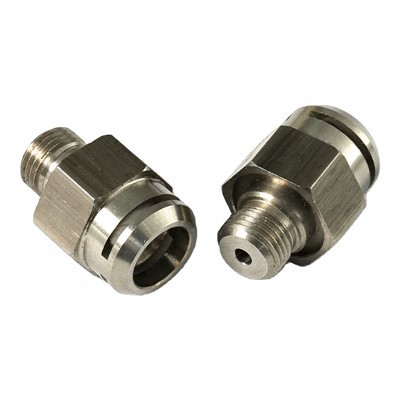
First, let’s keep it real: CNC turning gives us precise, consistent shapes, right? But when we machine a raw steel (or aluminum, or stainless—wait, no, heat treatment works different for each, let’s narrow this to the most common for shafts: carbon steel and alloy steel) blank, we leave tiny internal stresses in the metal. That’s from the cutting tool shearing through the material at high speeds, generating heat that makes the metal’s crystal structure shift unevenly. So before we even get to heat treatment, our turned shafts are strong enough for simple shelf parts, but not for anything that takes regular load, friction, or temperature swings. Let’s dive into the key mechanical properties that shift, because those are the ones you care about as a buyer.
First up: hardness. That’s the big one everyone asks about. When we say “hardness” for shafts, we mean how well they resist scratching, denting, or surface wear—think a drive shaft in a car that spins thousands of times a minute, or a conveyor shaft that runs against a bearing. Before heat treatment, a CNC turned steel shaft might clock in at ~150-200 HB (Brinell hardness, the old standard we still use for on-shop checks). After a common process like quenching and tempering, we can get that up to 40-55 HRC (Rockwell C hardness, which is the go-to for functional parts). Wait, but why not just make it super hard? Because too hard makes it brittle, right? That’s where tempering comes in—quench it too fast, and you get martensite, that super-hard but super-fragile crystal structure that snaps like a cheap pencil if you twist it even a little. So tempering is just heating the quenched shaft to a lower temperature (like 300-600°F, depending on the steel grade) to take the edge off that brittleness. I had a customer last year who ordered shafts for a farm equipment conveyor; he skipped the temper step once to save a few bucks, and half his shafts cracked when he ran them through the first harvest. Oops. That’s the kind of mistake we help our buyers avoid by matching heat treatment to their load requirements.
Next: tensile strength and yield strength. Let’s define those quick because they’re often mixed up: tensile strength is the max load a shaft can take before it fails completely (snaps), and yield strength is the max load it can take before it’s permanently bent (stays deformed, not just springy like a rubber band). Before heat treatment, a mid-grade 1045 steel CNC turned shaft has a yield strength of ~35,000 PSI and tensile strength of ~60,000 PSI. After quenching and tempering, those jump to ~60,000 PSI and ~90,000 PSI—more than double the load they can handle before breaking. For alloy steels, like 4140 (the workhorse for heavy-duty shafts), the numbers go even higher: pre-heat treatment is ~45,000 PSI yield / 75,000 PSI tensile, post-heat it’s ~85,000 PSI yield / 120,000 PSI tensile. That’s the difference between a shaft that holds a 1000 lb press load and one that folds like a lawn chair. I can’t tell you how many times a design engineer will spec a shaft that works in CAD but doesn’t account for the actual strength boost from heat treatment—we usually flag that, but sometimes they still go cheap on parts that end up failing in the field.
Then there’s impact toughness, which is the underrated property no one talks about until it’s too late. Toughness is how well a shaft absorbs sudden, sharp loads—like a car hitting a pothole, or a conveyor getting jammed with a metal part, or a garden tractor running over a root. Pre-heat treatment, a steel shaft is pretty tough, but after quenching if you don’t temper it right, it’s like a glass bottle: one hard knock and it shatters. But when we temper it correctly, we balance hardness and toughness: for example, a 4140 shaft tempered at 400°F has great hardness (52 HRC) but okay toughness, while one tempered at 600°F is slightly less hard (45 HRC) but way better at absorbing sudden impacts. Last month we did a test run for a client making shafts for a robotic arm that slams into stops on every cycle; their initial request was for maximum hardness, but we ran a side test with both heat treat settings and the 600°F tempered shafts didn’t break after 1 million cycles, while the harder ones cracked at 120k cycles. That’s the tradeoff we walk every day—we don’t just apply a one-size-fits-all heat treat, we tweak it based on what the shaft is going to do.
Don’t sleep on fatigue strength either, especially for rotating shafts. Fatigue is when a shaft breaks over time from constant, repeated load—like a drive shaft spinning 24/7 in a factory fan, or a bicycle crank shaft that gets pushed on every pedal stroke. Before heat treatment, CNC machining leaves tiny micro-cracks and residual stress at the surface of the shaft, which act as starting points for fatigue breaks. When we do heat treatment, especially a process like shot peening (which we often pair with heat treat for shafts), we compress the surface of the part, closing up those micro-cracks and adding compressive stress instead of the tensile stress that causes breaks. Pre-heat treatment fatigue strength for a 1045 steel shaft is ~20,000 PSI, post-heat (with proper temper) it’s ~40,000 PSI—doubling how long the shaft will last under constant rotation. I’ve seen so many clients use untreated shafts for long-running applications and have to replace them every 6 months; switching to our heat-treated shafts cuts that lifespan to 5+ years, which saves them a ton of downtime and money.
Wait, but hold up—this is all for steel, right? What about other materials we work with, like stainless steel or aluminum? Aluminum is tricky because most types don’t harden via quenching—they use precipitation hardening, which is a different heat treat process. CNC turned 6061 aluminum shafts, for example, go from ~90 HB and 30,000 PSI yield pre-heat to ~120 HB and 45,000 PSI yield post-precipitation hardening. Stainless steel, like 304, is austenitic so it’s not heat treatable for strength, but we do work harden it during CNC turning, and a low-temperature heat treat takes the residual stress out, making it more durable for food-grade or medical applications where it can’t be hardened too much because it needs to stay corrosion-resistant. That’s why we never just say “we do heat treat”—we match the process to the material and the application, which is why our customers come back.
Now, let’s talk about common mistakes we see buyers make with this. First, thinking heat treatment makes all shafts better. It doesn’t—if you have a shaft that only needs to hold a light load, like a display stand, heat treatment is overkill and adds cost. But for any functional shaft in motion, taking a load, or exposed to friction, it’s non-negotiable. Second, not considering distortion. Wait, CNC turning gives us a shaft that’s within 0.001” tolerance, right? If we quench it too fast, the heat treatment can warp it, which means we have to grind it back to tolerance. That’s an extra step we add at our shop to make sure the final shaft is still perfectly straight, no warping, even after heat treatment. A lot of smaller shops skip the grinding step, so you get a shaft that’s strong but won’t fit in the bearing it’s supposed to. That’s a huge pain point for us—when a customer gets a warped shaft from another supplier, they send it to us and we have to fix it before they can use it.
Another mistake is choosing the wrong steel grade for the heat treat. For example, if you use a low-carbon steel (like 1018) that’s not meant for hardening, quenching it won’t do much—you’ll get a little hardness boost, but not enough for heavy loads. We usually steer customers towards 1045 for general-purpose shafts, 4140 for heavy-duty, and 6061 aluminum for light, corrosion-resistant applications, then adjust the heat treat to match.
So why does this matter for you, the person sourcing CNC turned shafts? Let’s put numbers to it: a customer we had last year was buying untreated shafts for their packaging line. Each shaft cost $0.80, and they replaced 20 shafts every month, so $1920 a year in replacement parts and downtime. They switched to our heat-treated shafts, each costing $1.20, and now replace 2 shafts a year—total cost $2.88, saving them almost $1900 a year, plus no downtime from broken shafts mid-shift. That’s the kind of ROI we can deliver when we get the heat treat right.
At our shop, we work directly with our customers from the first quote all the way to the final part, so we can ask those exact questions: “What’s this shaft going to do? How much load does it take? Is it in a rotating part? Does it need to handle hot or cold environments?” Then we pick the right material and heat treatment process—whether that’s quenching and tempering for maximum strength, precipitation hardening for aluminum, or stress-relief annealing for delicate stainless shafts. We also do full quality checks: hardness testing on every batch, dimensional checks to make sure there’s no distortion, and even fatigue testing for high-stakes parts like aerospace or automotive shafts. No cutting corners, no one-size-fits-all, just parts that actually work for your application.
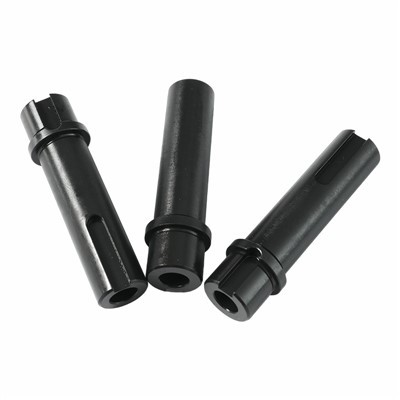
If you’re tired of shafts that break too soon, warp, or don’t hold up to the job, let’s chat. We can send you a free sample of a heat-treated shaft so you can test it against the ones you’re currently using, no strings attached. Just reach out, and we’ll walk through exactly how we can adjust the heat treatment to fit your needs, no jargon, no hidden fees.
Carbon Steel Turned Parts References
ASM International. (2020). Heat Treater’s Guide: Practices and Procedures for Irons and Steels. ASM International.
Dietrich, J. R. (2018). Understanding Heat Treatment of Metals. Industrial Press.
Kalpakjian, S., & Schmid, S. R. (2021). Manufacturing Processes for Engineering Materials (8th ed.). Pearson.
Huizhou Quanyi Precision Hardware Products Co., Ltd.
Address: Building A10, 7th Floor, Zhongchuangyingke 5G Industrial Park, Zhonghan Industrial Park, Tonghu Town, Huizhou City
E-mail: info@qycncturning.com
WebSite: https://www.qycncturning.com/
