If you’ve ever ordered custom valve castings from a supplier, you’ve probably asked this question at least once: What is the cooling rate for valve castings? It’s not a trivial detail—this metric doesn’t just impact how fast a casting comes out of the mold. It shapes its mechanical strength, resistance to corrosion, ability to handle extreme pressure, and even how much post-production machining work we have to do at our shop. As someone who’s been in the valve castings game for 12 years, I’ve learned to treat cooling rates like the unsung backbone of every high-quality valve part that leaves our warehouse. Too many buyers only notice the end product, not the choices we make in the mold room that get us there. Valve Castings

Let’s start with why valve castings are different from, say, a decorative metal hardware part. Valves don’t live in a basement corner—they live in oil refineries, chemical plants, power plants, and water treatment facilities. A gate valve for a natural gas pipeline that has to open and close 10,000 times a year can’t crack under pressure, can’t corrode when exposed to saltwater or sulfur, and can’t warp if the temperature swings 500 degrees in a day. The cooling rate is the first step to making sure that happens. When molten metal (usually carbon steel, stainless steel, or alloy steel like 17-4 PH) is poured into a sand mold, it cools in three distinct stages. The first stage is the high-temperature cooldown, where liquid metal turns solid. This is where the cooling rate is most critical because it determines the size of the metal’s crystal grains. Slow cooling creates big, uneven grains that make the casting brittle and prone to cracking when under stress. Fast cooling creates tiny, uniform grains that are strong and consistent—but go too fast, and you get internal stresses that lead to warping or hidden flaws deep inside the metal. That’s where our expertise comes in, not just as a supplier, but as a partner who works with buyers to adjust cooling rates to fit their exact application.
For most standard valve castings we produce—think 2-inch to 12-inch gate, globe, and check valves for general industrial use—we aim for a cooling rate between 0.5°C per second and 2°C per second in the critical solidification stage. Wait, I know what you’re thinking: that’s a wide range. Why not just pick a single number? Because not all molds are the same. Let’s take a 4-inch stainless steel globe valve for a municipal water system, for example. That part has a thin valve stem section and a thick valve body section. If we cool the whole mold at 0.5°C per second, the thin section will cool too fast and develop micro-cracks, while the thick section will cool too slow and form large, weak crystals. That’s a problem. For this part, we adjust the mold’s thermal mass by adding small metal chills (cooling bars) to the thickest sections of the mold. The chills pull heat away faster, so the thick section cools at the same 0.5°C per second as the thin section. For a smaller 2-inch carbon steel gate valve for a small plumbing system, we can use the same sand mold, no chills, and still hit 1°C per second cooling—this is a simpler part, so it doesn’t need as precise of a match between sections, and a slightly faster cooling rate cuts production time without sacrificing quality.
But here’s the thing: cooling rates aren’t one-size-fits-all, and they change when you move from standard castings to specialized parts. A valve casting for a nuclear power plant can’t have even the tiniest internal voids. For these, we target a cooling rate of 0.3°C per second to 0.8°C per second across the entire mold. We use larger, denser sand molds (often with ceramic cores for complex internal passages) and even gentle external cooling systems, like low-volume air flow around the mold, to make sure the cooling stays slow and uniform. Why? Nuclear valves have to operate at extreme pressure and temperature, and even a small void from uneven cooling can lead to a catastrophic failure. We had a customer in the power generation industry ask us for help with a nuclear valve casting order three years ago—they’d used another supplier’s parts that kept failing pressure tests, and when we ran cross-sections, we saw large crystal grains in the thick body section from a cooling rate that was too slow (they’d let the mold cool naturally, which dropped the temperature at 0.1°C per second). We adjusted their mold design, added chills, and locked in a precise 0.6°C per second cooling rate. They’ve been a repeat customer ever since.
Alloys also play a huge role in setting the right cooling rate. We work with a lot of alloy steel valves for chemical processing, where parts have to resist corrosion from acids or caustic solutions. For 22Cr duplex stainless steel valve castings, which are popular for these harsh environments, we have to be extra careful. Duplex steel has two crystal phases (ferrite and austenite) that need to form in equal amounts to work properly. If the cooling rate is too fast, only ferrite forms, making the part brittle. If it’s too slow, austenite takes over, and the part loses its corrosion resistance. So for duplex steel valves, we target a cooling rate of 1°C per second to 1.5°C per second. We test this rate with a thermal couple inserted into the mold before pouring, so we can monitor every second of the cooldown process. That’s not something every small valve casting supplier does—many skip the thermal couple step and just rely on past experience, which leads to higher failure rates for specialized alloy parts.
I’ve heard plenty of buyers ask why we can’t just make the cooling rate faster to get parts to them sooner. The short answer is: it’s a tradeoff. Faster cooling means faster production, but it means higher risk of flaws, rework, and parts that don’t meet industry standards like ASME B16.34, which is the global standard for valve castings. We once had a potential customer, a mid-sized oil and gas company, ask us if we could deliver their 6-inch carbon steel gate valves in half the usual time by speeding up the cooling rate. They’d gotten a quote from a supplier that offered 3-day turnaround vs. our 7-day, and they thought we were being slow. We explained that a 3-day turnaround would mean a cooling rate of around 4°C per second, which would create internal stresses in the thick valve body that would show up during hydrostatic testing. They decided to go with us instead, and when we delivered the parts, they passed every test—unlike the sample from the other supplier, which cracked during their on-site pressure test two weeks later. That’s the kind of trust we build by being honest about cooling rates, not just the speed of delivery.
Another common misconception is that the cooling rate only matters when the metal is solidifying. But it actually continues to matter for the next 24 to 48 hours as the casting finishes cooling to room temperature. If a casting is pulled out of the mold too early, when it’s still 500 degrees or more, it cools too fast once exposed to air, leading to surface cracks. We always leave castings in the sand mold for at least 12 hours for small parts and up to 48 hours for large, heavy valve bodies. This slow, gradual cooldown after solidification helps relieve the internal stresses that form during the first stage of cooling. It’s an extra step that adds to our production time, but it’s why our valve castings have a 98% first-pass rate on pressure tests. We’ve had buyers switch from other suppliers who skipped this step, and they’re shocked at how few of our parts need reworking.
So how do we measure and control cooling rates at our facility? It’s a process we’ve refined over a decade, not a random guess. First, we work with every customer to understand their valve’s application: what pressure it’ll handle, what temperature range it’ll operate in, what environment it’ll be exposed to. Then we select the right metal alloy, design the mold (including adding chills if needed), and insert thermal couples into critical sections of the mold. When we pour the metal, we monitor the temperature every second using a digital data logger. Once the solidification stage is complete, we continue monitoring the cooldown until the casting is at room temperature. We keep all that data on file, not just for quality control, but to refine our processes for future orders. For example, we recently updated our mold design for 8-inch globe valves for water treatment plants, based on data from 50 previous orders, and cut the cooldown time by 10% without sacrificing quality. That’s the kind of value we add as a supplier, beyond just pouring metal into a mold.
I know how overwhelming it can be to source valve castings, especially if you’re not familiar with the metallurgy behind them. You just need a valve that works, that lasts, that doesn’t cause unplanned downtime. The cooling rate is a key part of that, and it’s a detail that separates good valve casting suppliers from great ones. Too many suppliers cut corners on cooling to save time or money, but that ends up costing you more in the long run in repairs, replacements, and downtime.
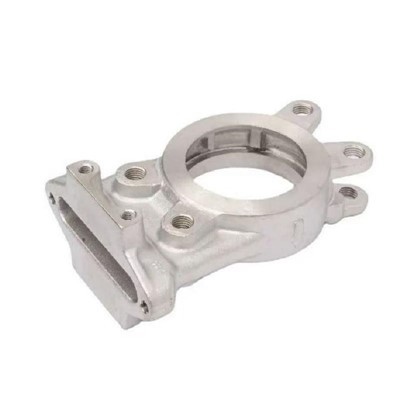
If you’re tired of dealing with valve castings that fail pressure tests, corrode too fast, or take too long to deliver, we’re here to help. We don’t just sell valve castings—we work with you to design, produce, and deliver parts that meet your exact needs, including getting the cooling rate right for your specific application. We offer custom quotes, test reports for every order, and flexibility to adjust processes like cooling rates to fit your timeline and quality requirements. Whether you need a small batch of standard gate valves for a local plant or large, specialized alloy valves for a global industrial project, we have the expertise and quality control to get it done right. Reach out to our team to discuss your valve casting needs, and we’ll walk you through every step of the process, including how we’ll set the ideal cooling rate for your parts. You won’t have to guess about quality or turnaround—we’ll be transparent every step of the way.
Fan Impeller References
- ASME B16.34, Valves – Flanged, Threaded, and Welding End
- Campbell, J. (2015). Complete Casting Handbook: Metal Casting Processes, Metallurgy, Design and Design. Butterworth-Heinemann
- Davis, J.R. (Ed.). (1994). Alloying: Understanding the Basics. ASM International
Shandong Shunye Stainless Steel Co., Ltd.
Shandong Shunye Stainless Steel Co., Ltd. is one of the most professional valve castings manufacturers and suppliers in China, also supports customized service. Welcome to buy bulk cheap valve castings made in China here and get quotation from our factory. For price consultation, contact us.
Address: Shandong Province, Binzhou City, Wudi County, Liubao Town, Zhangdong Road, Duliucun Village
E-mail: sales@wdshunye.com
WebSite: https://www.shunyecasting.com/
