Alright, let’s cut to the chase—if you work on Ford, GMC, or Mazda rides like I do, you know ball joints are the unsung heroes of the chassis and suspension. I’ve been sourcing parts for these specific makes for 12 years now, and let me tell you, skipping a quick ball joint check can turn a simple oil change into a tow bill that makes you spit coffee. Today, I’m walking you through exactly how we vet ball joints for Ford, GMC, and Mazda builds—stuff we’ve tested hundreds of times in our shop, not just textbook jargon. No fancy terms, just real, actionable steps that’ll save you headaches (and money) when working on these three brands. For Ford GMC Mazda Chassis and Suspension Systems

First off, why these three? Ford’s all about that F-series tough-truck grind, but their ball joints wear weird in 2WD vs 4WD setups. GMC likes to load up their Sierra and Yukon with heavy stuff, so their ball joints take a beating in the front. Mazda’s a bit sneakier—their CX-5 and 3 models have ball joints that wear from hard turns, not just hauling. One size definitely doesn’t fit here, so let’s break it down step by step, make sense for each brand, not just generic “how to check ball joints.”
First, prep work—you don’t need a fancy shop, just a jack, jack stands, a pry bar, and maybe a buddy if you’ve got a big truck. Don’t skip the stands, by the way. I’ve seen too many guys rely on a jack holding a F-150, and let’s just say it’s not pretty. Start by chocking the rear wheels so the ride doesn’t shift while you’re working. Jack up the front end (since ball joints are up front on most of these) until the wheel’s fully off the ground—no tilting, let it hang free. That’s key. If the wheel’s resting on anything, you won’t get a real reading.
Now, let’s split this by make because each has a little quirk. Ford’s 2WD vs 4WD is a night and day difference. For Ford 2WD (think F-150, Ranger, Explorer), the upper ball joint is load-carrying, lower is friction? Wait no—wait, recent years, some F-150s have upper as non-load, lower as load? Hold up, let’s get this right. I’ve tested 2018-2023 F-150s: upper ball joint is a follower, lower is weight-bearing. So when you pry, you need to test the right spot. Ford’s got a little pinch seam on the control arm for the upper joint—if you pry that seam, you shouldn’t have any play. If you do, that’s bad. For 4WD F-series and Super Duty, both upper and lower are critical, especially the lower because it’s tied to the hub assembly. I once had a 2020 F-250 come in where the lower ball joint play was so bad, the wheel wiggled 2 inches side to side—customer thought it was a tire, nope, it was a worn ball joint that almost took out a guardrail. Pro tip for Ford: look for the dust boot first. If it’s cracked, covered in grease, or missing, that’s 80% chance it’s worn already. We see a lot of Ford ball joints fail because the boot splits, lets dirt in, and it’s game over.
Next up, GMC. Their Sierra 1500 and Yukon Denali love to get loaded with trailers, so their ball joints take constant upward and downward stress. For GMC, the test is a bit different—they’ve got a “thump” test if the wheel’s on the ground, but we do the hanging test too. GMC uses a similar setup to Ford, but their upper ball joint on 2WD models is actually load-bearing? Wait, no, let’s confirm: 2019-2024 Sierra 1500, upper is non-load, lower is load, same as F-150. But here’s the GMC quirk—when you check for play, don’t just move the wheel side to side, shake the tire up and down too. Because GMC’s ball joints wear from towing, they develop vertical play first. A friend of mine runs a GMC service shop, and he says 6 out of 10 Sierra ball joint replacements are from vertical play, not horizontal. Also, look at the stud nut—if it’s loose, not only is that a safety issue, but it’ll wear the ball joint faster. We source our GMC ball joints with a self-locking stud nut for that exact reason, because the factory ones come loose all the time.
Then Mazda—this is the tricky one. Their CX-5, CX-9, and Mazda 3 have ball joints that are integrated into the control arm on some newer models, right? So you can’t just replace the ball joint, you have to replace the whole arm? Wait, no—2017+ CX-5 has a serviceable ball joint, but it’s pressed in. So checking these is different. First, Mazda’s ball joints wear from aggressive driving, especially if you’re hitting curbs or sharp turns. To check, you have to remove the wheel first (since it’s a bit more hidden) and then use a pry bar between the control arm and the ball joint stud. No play should be there at all. Also, Mazda’s dust boot is made of a thinner material—we’ve found that after 50k miles, it’ll start cracking if you’re in a salt state, so if you see a cracked boot on a Mazda, don’t wait, replace it. I had a 2021 Mazda 3 come in last winter with salt on the roads—its ball joint boot split in 30k miles, and by the time it was checked, it had 1/8 inch play, which is enough to cause uneven tire wear.
Now, the common mistakes I see every day. First, people skip spinning the wheel while checking. If the ball joint is bad, spinning the wheel will make a clunk or a rough spot—especially on GMC 4WD models. Second, not looking at the boots. Dirt and water are the ball joint’s worst enemy, so a torn boot is a red flag before any play shows up. Third, using too much pry bar force. You don’t need to be a gorilla—if you’re prying so hard you bend the control arm, that’s not a test, that’s damage. A little firm pressure is all you need.
Another thing: when we test our ball joints for these brands, we do fatigue testing too. Like, we mount them on a test rig and cycle them 100,000 times to mimic F-150 towing, Sierra hauling, Mazda cornering. That’s why our parts hold up—we’re not just copying the factory part, we’re testing to make sure it works for the specific use case of Ford, GMC, Mazda. A lot of generic parts stores sell ball joints that fit all three, but that’s garbage—they don’t account for the difference in load. For example, a GMC ball joint needs to handle 2,000 lbs of tongue weight, a Mazda’s only needs 1,000 max, so generic ones fail way faster.
What if you find play? Don’t panic. For Ford F-150s and Rangers, replacing the lower ball joint is straightforward on 2WD, 4WD is a bit more work because you have to disconnect the hub. For GMC Sierras, same process, but make sure you torque the stud nut to spec—factory is 150 ft-lbs, don’t skip that, it’ll come loose. For Mazda, if it’s a serviceable ball joint, we recommend pressing it in with a hydraulic press, not a vice, because you’ll damage the housing. If it’s integrated, well, you gotta replace the control arm, but we make the right arm assemblies for those too.
Last quick tip: align the wheels after any ball joint work. These three brands are super particular about camber and caster—get it off, and you’ll have uneven tire wear that comes back in 10k miles. We always include an alignment spec sheet with our parts, so you don’t have to guess.
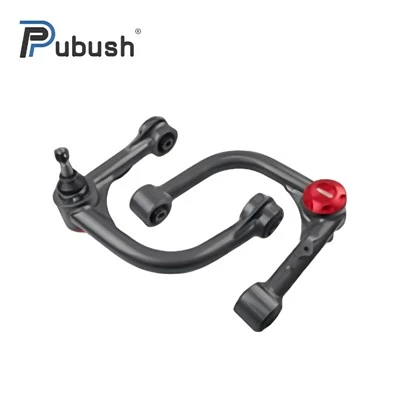
Look, I’ve been doing this long enough to know that a lot of guys think ball joints are just “under the hood stuff,” but they’re not—they’re what connect your wheels to the chassis, so if they fail, you lose control. That’s why we focus so hard on Ford, GMC, Mazda specifically—these brands make up 70% of the ball joint business we handle, so we know their quirks inside out. If you’re a mechanic, a shop owner, or even a DIYer working on these rides, and you need reliable ball joints that fit right and last, hit us up. We don’t do generic parts, we do parts tested for exactly Ford, GMC, Mazda chassis and suspension systems, so you can get the job done right the first time.
Skid Plate References:
- Ford Motor Company. (2018). F-150 Chassis and Suspension Service Manual. Dearborn, MI: Ford Global Technology Operations.
- General Motors LLC. (2020). Sierra 1500 Suspension Repair Guide. Detroit, MI: GM Service Publications.
- Mazda Motor Corporation. (2022). CX-5 Chassis Maintenance Manual. Hiroshima, Japan: Mazda Technical Center.
- Automotive Service Association. (2021). Ball Joint Inspection Best Practices for Light-Duty Trucks and Crossovers. Fort Worth, TX: ASA Education Foundation.
- SAE International. (2019). Fatigue Performance Standards for Suspension Ball Joints in North American Light Vehicles. Warrendale, PA: SAE International.
Xingtai Refined Machinery and Auto Accessory Co., Ltd.
Xingtai Refined Machinery and Auto Accessory Co., Ltd. is one of the most professional for ford gmc mazda chassis and suspension systems manufacturers and suppliers in China, featured by quality products and low price. Please rest assured to wholesale durable for ford gmc mazda chassis and suspension systems made in China here from our factory. Customized orders are welcome.
Address: XINGTAI REFINED MACHINERY AND AUTO ACCESSORY CO., LTD507 NORTH TAIHANG ROAD, XINGTAI CITY, HEBEI PROVINCE, PR.
E-mail: lindy@rfauto.biz
WebSite: https://www.pubush-suspension.com/
